Why part failures hurt B2B operations more than retail buyers
For a dealer or fleet owner, a failed seal or filter is not a one-line invoice—it is idle iron, missed hire revenue, angry site managers, and technicians redoing the same job twice. On JCB-class backhoe loaders and midi excavators, the same families of components fail repeatedly because duty cycles are harsh: dust, heat, shock loads, and long idle hours play havoc with hydraulics, cooling, and wear geometry.
This guide names the parts that fail most often in the field—not as a scare list, but so your procurement team can standardise on specifications, cross-references, and supplier checks before the machine is back in the trench.
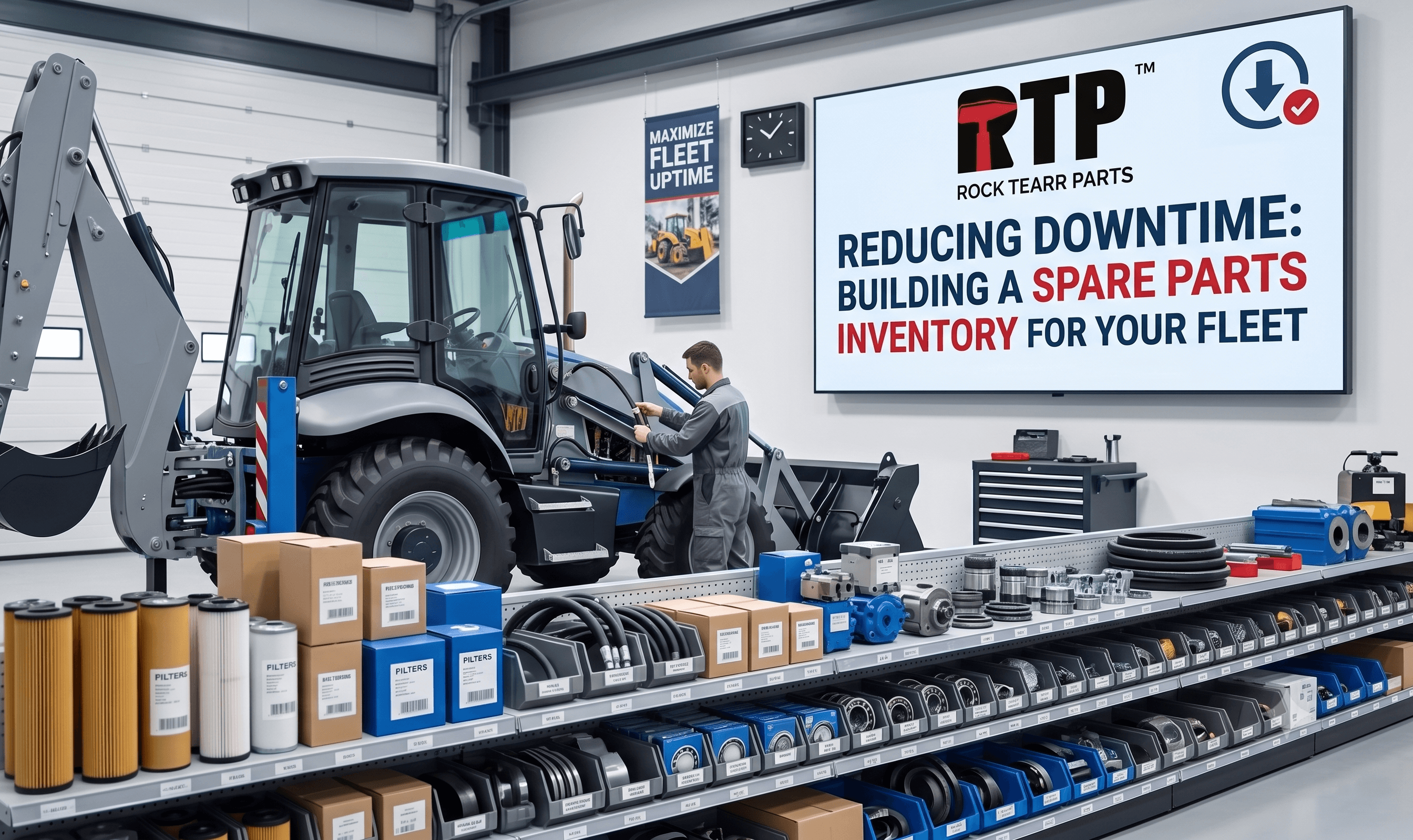
1–5: Air, fuel, oil, and hydraulic filters (the silent downtime drivers)
Filters are the highest-velocity SKUs for good reason. A collapsed air filter element starves turbocharged engines; a bypassed hydraulic return filter sends silt into valves and cylinders. Fuel filtration issues show up as rail-pressure faults and “no-start” mornings after water ingress.
- Air filters — Replace on hours and visual inspection; dusty sites shorten intervals sharply.
- Fuel filters / water separators — Drain bowls in high-humidity regions; carry spare elements on long-line dispatch.
- Engine oil filters — Pair every filter change with oil analysis if you run extended intervals.
- Hydraulic return & pilot filters — Never “blow clean” and refit unless the OEM explicitly allows it; micron rating matters.
- Transmission / brake system filters (where fitted) — Treat as safety-adjacent; use validated interchanges only.
Browse our filters category and use the parts catalogue to align elements with your machine serial band—not only the model badge on the cab.
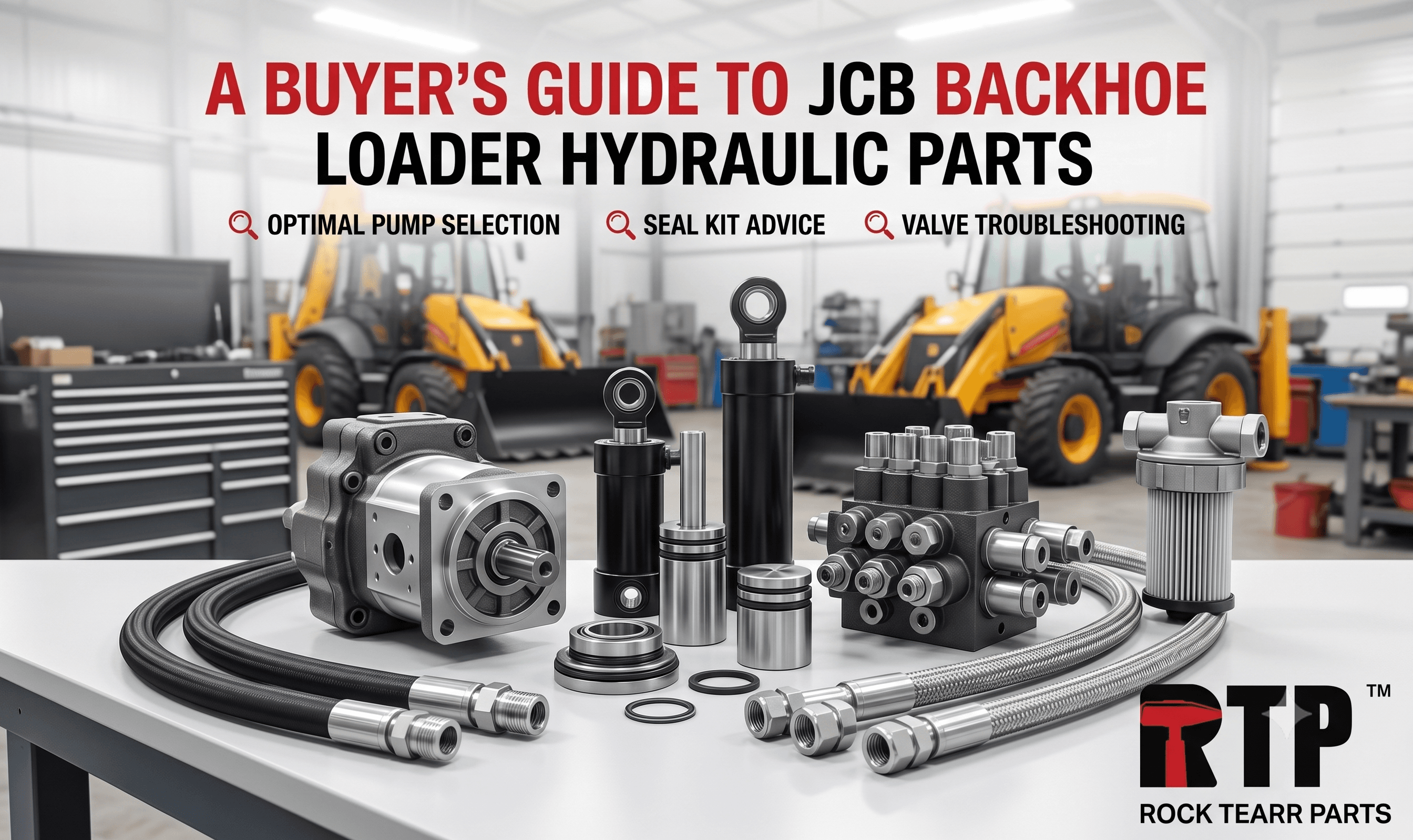
6–9: Hydraulic seals, rods, and hose assemblies
Hydraulic leaks are the most photographed failures in any workshop WhatsApp group. Rod seals harden from heat; wipers tear on grit; hoses chafe at boom pivot zones. When a ram drifts under load, procurement often orders a seal kit—but if the tube is scored or the valve spool is worn, the new seal fails in days.
- Rod and piston seal kits — Specify rod diameter, stroke, and gland type; photograph the gland plate.
- O-rings and backup rings — Keep a colour-coded service assortment for field teams.
- Hydraulic hoses — Match pressure rating, bend radius, and end fittings; crimp quality beats price per metre.
- Quick couplers and ball valves — Leaks here mask as “mystery” oil loss across the machine.
For hydraulic wear programmes, see hydraulics and seals, gaskets & O-rings, then request a bulk quote with your interchange list attached.
10–12: Pins, bushes, and linkage wear (geometry beats brand hype)
Loader and backhoe pivots wear into oval bores. Fitting an undersized pin “to tighten the joint” transfers load into welds and causes boom cracks. Good suppliers publish hardness, fit class, and grease path details.
- Pivot pins — Measure worn bores before reordering; consider line-boring on high-hour units.
- Bronze or composite bushes — Match wall thickness and lubrication groove pattern.
- Linkage balls and stabiliser pads — Often overlooked until stabiliser creep shows up on grade work.
Explore pins & pivots and bushes & bearings for structured RFQs.
13–15: Brakes, steering, and safety-linked hydraulics
Brake discs, pads, and master cylinders degrade faster in stop-start site work. Steering orbitals and priority valves demand clean oil—otherwise the steering feels “notchy” and operators fight the machine.
- Brake pads and discs — Replace as axle sets where recommended; bed-in procedures matter.
- Brake fluid / seals in pedal circuit — Contamination causes spongy pedals and long stopping distances.
- Steering components tied to load-sensing — Diagnose before throwing parts at symptoms.
Start from brake system components and escalate safety-critical lines with documented OEM references.
16–20: Cooling, belts, electrics, and “nuisance” failures that stop work
Thermostats, water pumps, and radiator cores fail from cavitation, silting, or impact damage. Alternators and starter motors suffer from vibration and dust. Sensors throw fault codes that look like major failures but trace back to connectors and chafed harnesses.
- Water pumps and thermostats — Overheating events shorten belt and bearing life across the front of the engine.
- Radiator cores & charge-air coolers — Clean externally; internal fouling needs chemical flush protocols.
- Drive belts and tensioners — Carry spares; a thrown belt often costs a day on a remote site.
- Alternators, starters, batteries — Voltage instability damages ECU peripherals—test charging before swapping sensors.
- Lighting and work lamps — Compliance and night-shift productivity depend on robust LED/housing choices.
Cooling-focused lines live under engine cooling; electrics under electricals. For mixed baskets, use parts list search then consolidate into one RFQ.
How to choose the right replacement (a practical checklist)
- Capture the OEM or interchange number from the failed part where legible.
- Record machine model, serial, and engine code—JCB families split mid-generation.
- Inspect related components (bores, valves, fluid) before closing the job.
- Demand batch traceability for safety-critical and high-load items.
- Align supplier MOQ with your fleet size to avoid emergency airfreight margins.
Independent suppliers vary widely; our companion guide on choosing a reliable JCB spare parts supplier in India walks through red flags and trial-order discipline.
Hour meters, job costing, and why “calendar maintenance” fails
Fleets that only service on calendar months inherit someone else’s failure curve. Tie filter and fluid changes to meter hours and contamination exposure: a municipal 3CX on soft verge work is not the same as a rental unit on crushed rock. When you log hours at failure, you can see whether you are consistently short-changing intervals—or overrunning them safely with oil analysis. Share those logs with your supplier; MOQ and dispatch planning improve when both sides see seasonality (monsoon dust, harvest peaks, quarry double shifts).
Use parts list search to pull part numbers from your workshop lists, then fold them into a single RFQ so critical lines ship together.
Closing the loop: from single breakdown to a stocking strategy
Workshops that win treat every failure as data: hours on machine, application (quarry vs. utility), fluid samples, and photographic evidence. That dataset drives par levels and supplier scorecards instead of one-off panic buys.
When you are ready to consolidate purchasing, Rock Tearr Parts supports bulk pricing, fast dispatch, and export-ready packing for India domestic and international lanes—without pretending to be the OEM. We focus on OEM-compatible quality, honest compatibility notes, and RFQ-first pricing for serious buyers.