Electrical faults have a reputation for being di$cult to diagnose, largely because symptoms often don't point directly to the cause. Here's a practical breakdown of the most common issues.
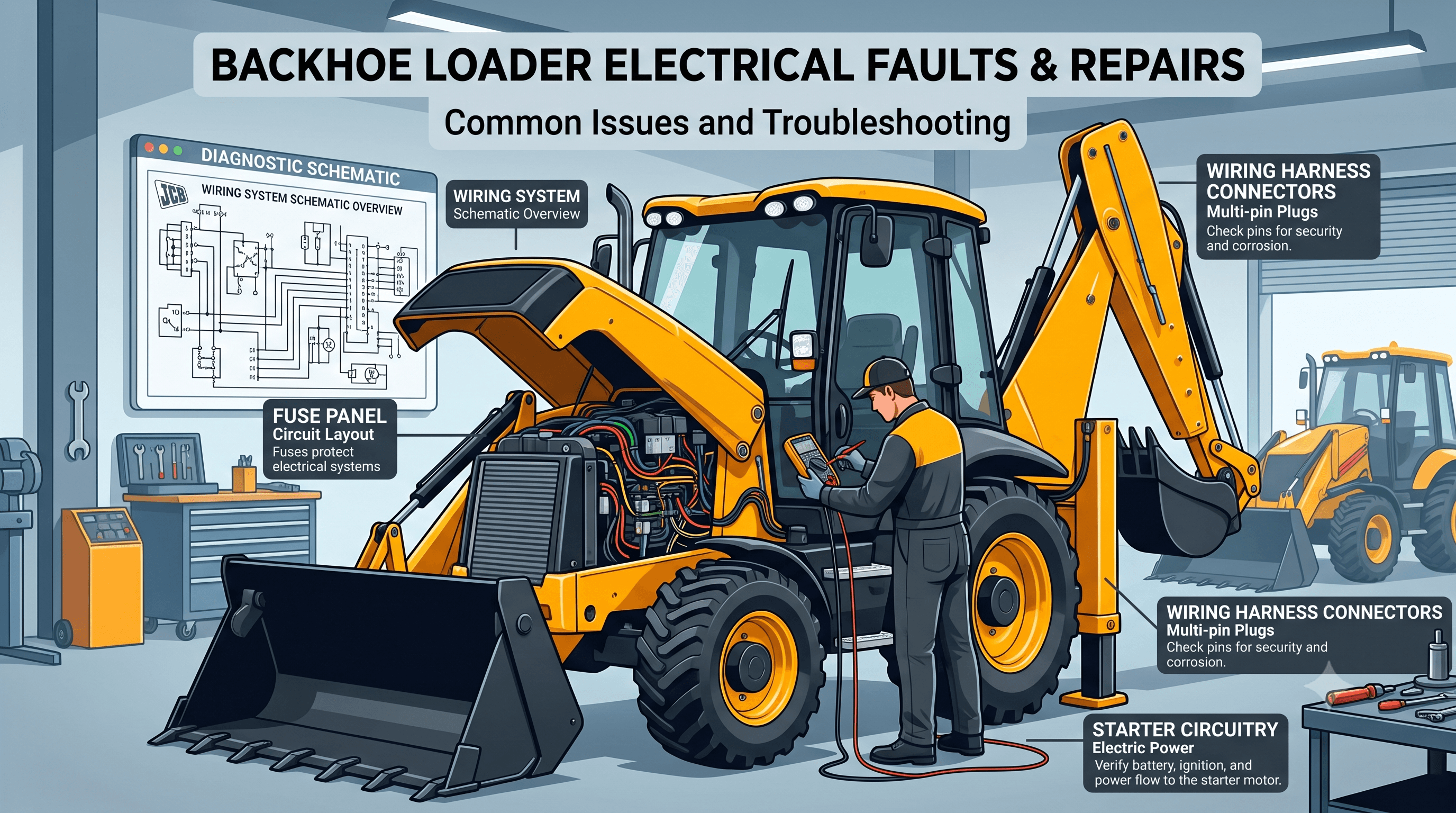
Intermittent warning lights or sensor faults. Often traced to corroded or loose connector pins rather than the sensor itself. Before replacing a sensor, check and clean the connector — this resolves a surprising share of "sensor failures."
Battery drain overnight. Usually caused by a parasitic draw from a faulty relay, a component that isn't fully powering down, or a failing battery that can no longer hold charge. A load test on the battery is the fastest way to rule out the cheapest cause first.
Starter motor issues. Clicking without cranking often points to a worn starter solenoid or poor connection at the battery terminals, rather than the starter motor itself needing full replacement.
Wiring harness damage. Common in machines that work in harsh environments — rodent damage, chafing against moving components, or corrosion at exposed splice points are the usual culprits. A visual inspection along the harness route, especially near pivot points, catches most of this before it causes a full failure.
Water ingress into connectors. A frequent cause of faults that seem to "come and go" with weather. Dielectric grease applied to connector points during routine service is a low-cost preventive measure.
CAN-bus communication issues are best diagnosed with proper diagnostic equipment rather than guesswork — but the majority of everyday electrical gremlins trace back to the simpler mechanical causes above: corrosion, loose connections, and chafed wiring.
Need the right OEM-compatible line? Cross-check numbers on our OEM database, then request a quote with quantities and machine serial.