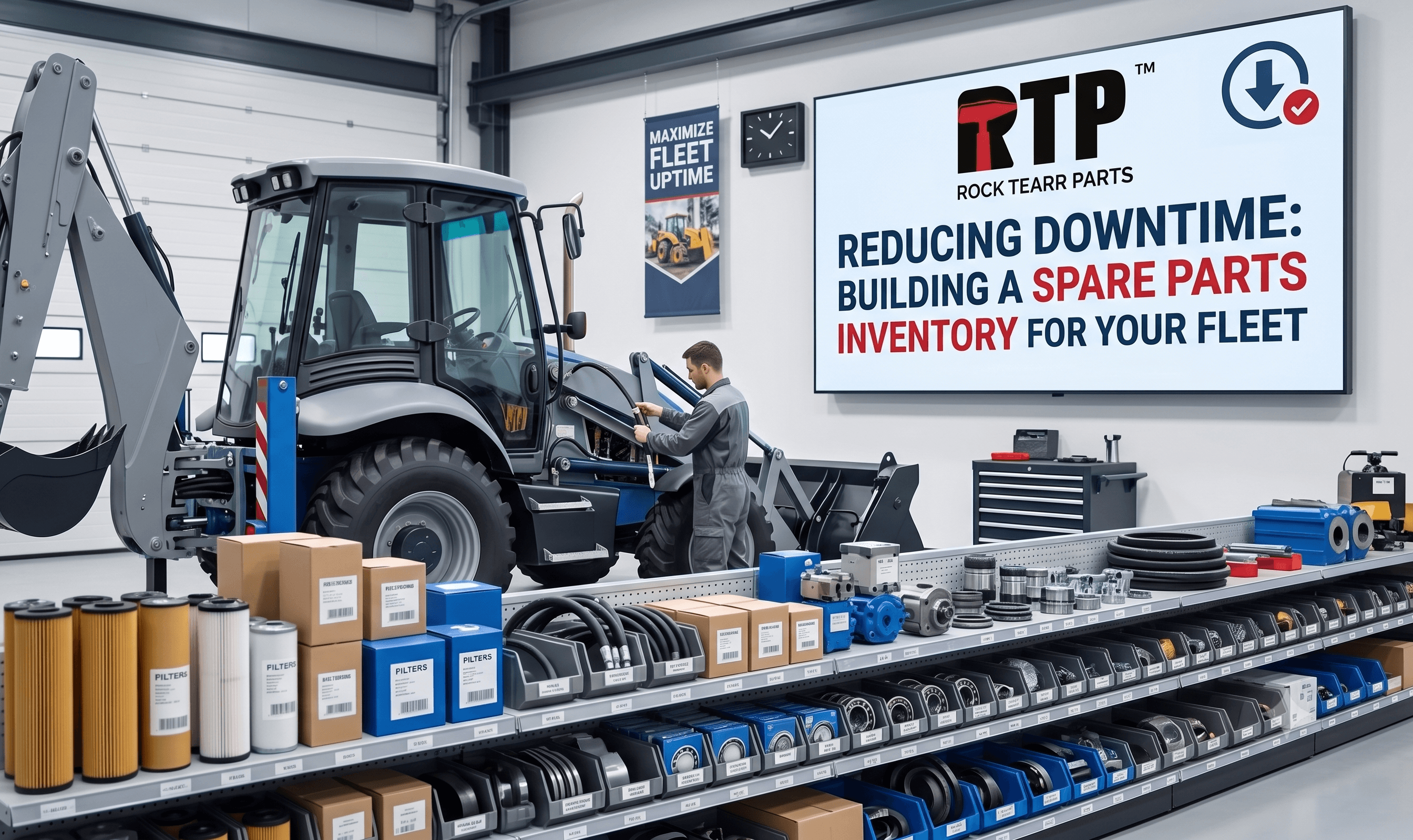
Every hour a machine sits idle waiting for a part is an hour of lost productivity. A thoughtfully built spare parts inventory is one of the highest-leverage investments a fleet operator can make — but it only works if it's built strategically, not just stocked heavily.
Start with your failure data. Look back at the last 12-24 months of maintenance and repair records. Which parts have you ordered more than once? Those are your highestpriority stock items — they've already proven to be predictable wear points on your specific machines.
Categorise by criticality and lead time. Parts that are both critical to operation and slow to source (specialised hydraulic components, certain electrical modules) deserve a place in your inventory even if they're expensive and rarely fail — the cost of downtime
Stock the predictable wear items as a baseline. Filters, belts, common seals, and fuses are inexpensive, have a shelf life measured in years, and are used across nearly every machine in a mixed fleet. These should always be on the shelf.
Standardise where you can. If your fleet includes multiple machines, look for parts that are shared across models — a single filter or belt spec that fits three machines instead of stocking three separate part numbers reduces both cost and complexity.
Build a relationship with a responsive supplier. No inventory can cover everything. The real safety net is a supplier who can turn around an urgent order quickly for the items you've chosen not to stock — that partnership is as much a part of your downtime strategy as the shelf itself.
Review and adjust quarterly. Fleet needs change as machines age and duty cycles shift. Revisit your stock list every few months rather than setting it once and forgetting it.
Need the right OEM-compatible line? Cross-check numbers on our OEM database, then request a quote with quantities and machine serial.