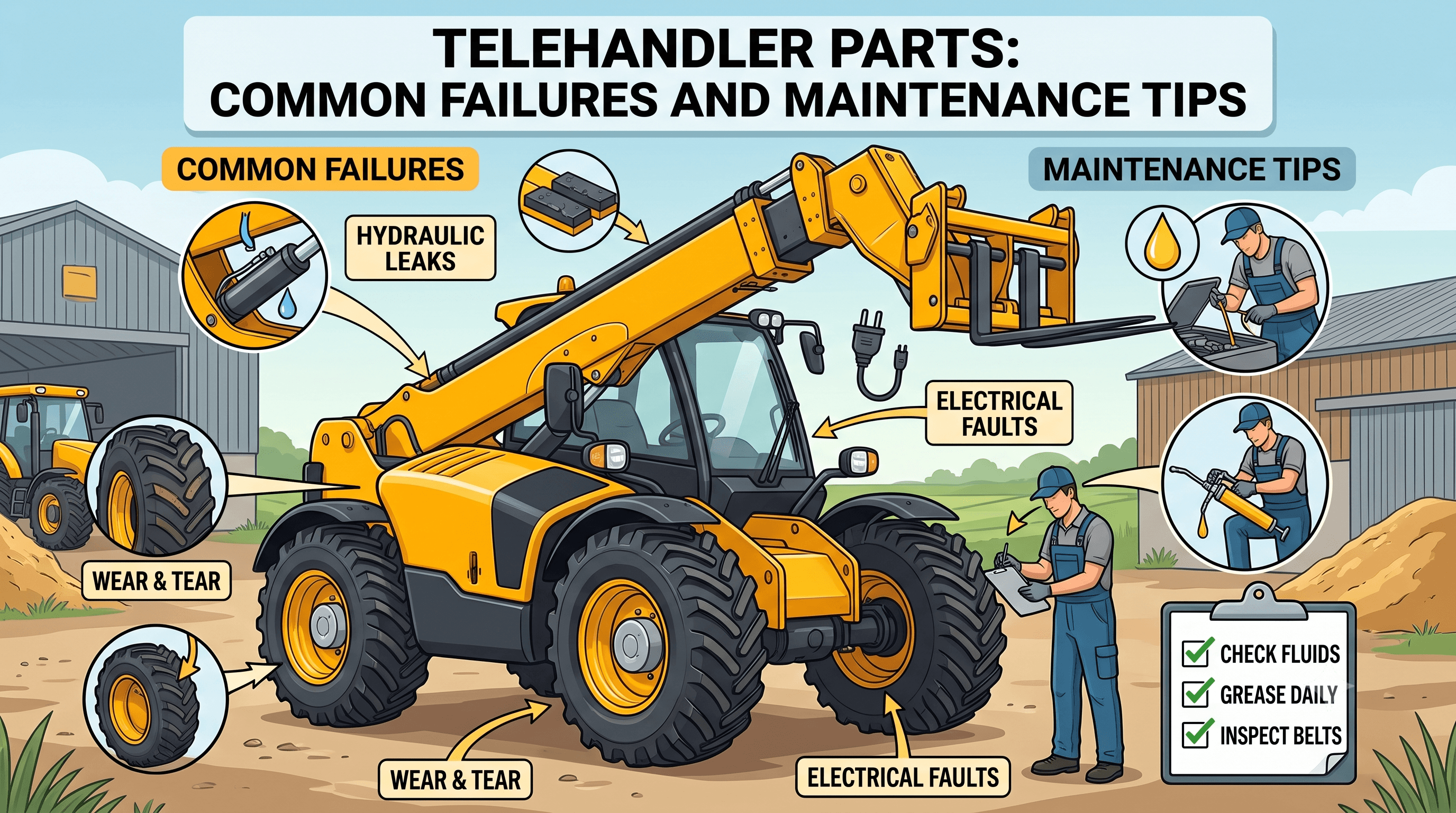
Telehandlers combine hydraulics, a telescoping boom, and load-handling attachments into one machine, which means wear points span several systems. Here's where to focus attention.
Boom wear pads and slide surfaces. As the telescopic sections extend and retract, wear pads take continuous friction load. Listen for new scraping or grinding noises during boom extension — an early sign these need replacement.
Boom extend/retract cylinder seals. A boom that drifts inward under load, or extends unevenly, often points to a worn cylinder seal rather than a hydraulic pump issue.
Load-sensing and safety system components. Telehandlers rely on load-moment indicator systems to prevent tip-overs — sensor faults here should never be ignored or bypassed, and should be diagnosed and repaired promptly.
Attachment coupler wear. Frequent attachment changes accelerate wear on quickhitch and coupler components. Inspect for play or looseness regularly, particularly on
Tyres and wheel bearings. Telehandlers often work on uneven or rough terrain, accelerating tyre wear and putting extra strain on wheel bearings. Uneven tyre wear patterns are worth investigating rather than dismissing as normal.
Cab visibility components. Mirrors, cameras, and glass on telehandlers take more impact damage than on other machine types due to close-quarters manoeuvring — keep spares on hand as these are often needed urgently for safety compliance.
Maintenance habit that pays off most: greasing the boom and pivot points on schedule. Telehandlers have more grease points than most machines in a mixed fleet, and skipped greasing intervals are one of the most common (and most preventable) causes of accelerated boom and pivot wear.
Need the right OEM-compatible line? Cross-check numbers on our OEM database, then request a quote with quantities and machine serial.